Paso Basin Water Policy Changes: What Vineyard and Agricultural Landowners Need to Know
Vineyard Real Estate • Agricultural Land • Water & Land Policy March 5, 2026
Vineyard Real Estate • Agricultural Land • Water & Land Policy March 5, 2026

San Luis Obispo County’s wine country continues to evolve, and for vineyard owners, farmers, and land investors, water policy is becoming one of the most important factors influencing long-term property decisions. If you own agricultural land in the Paso Robles region—or are considering purchasing vineyard property here—I want you to be aware of a few recent updates affecting the Paso Robles Groundwater Basin.
These changes involve a new Followed Land Registry program and the potential implementation of groundwater management fees. While these topics may sound technical at first glance, they are important developments that could influence how vineyard properties are managed and how water use is measured in the future.
Understanding these updates can help landowners make better decisions about irrigation, land management, and long-term property planning in Paso Robles wine country.
Recent actions by the County of San Luis Obispo and the Paso Robles Area Groundwater Authority (PRAGA) introduce two important developments that vineyard and agricultural landowners should be aware of.
These updates focus on:
• A new Followed Land Registry program
• Proposed groundwater management fees for basin users
Both initiatives are part of broader efforts to bring the Paso Robles Groundwater Basin into long-term sustainability under California’s Sustainable Groundwater Management Act.
For those of us involved in vineyard property and agricultural land in this region, water regulations are worth paying attention to because they often shape both land use decisions and long-term property value. For vineyard and agricultural landowners in Paso Robles, understanding Paso Basin groundwater policy is becoming an increasingly important part of long-term property planning.
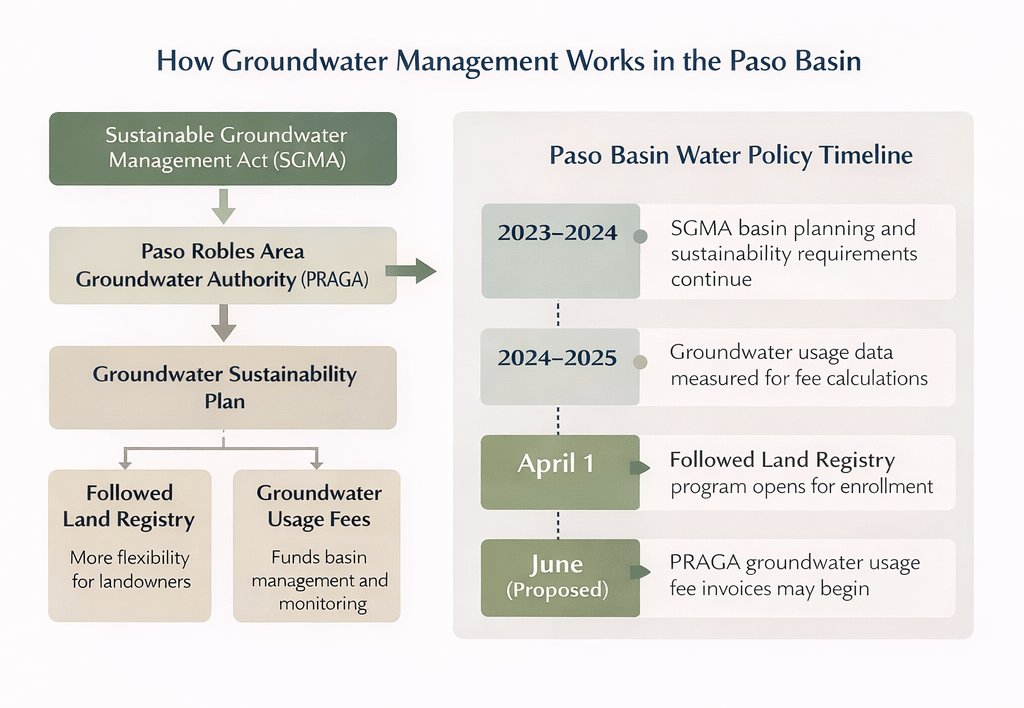
One of the more significant developments is the introduction of the Followed Land Registry. This program is designed to provide more flexibility for agricultural landowners managing irrigated property within the Paso Basin.
Historically, the Paso Basin Inland Land Use Ordinance—often referred to as the “offset ordinance”—placed restrictions on certain irrigation expansions and land use changes. The new registry program aims to ease some of those restrictions for landowners who voluntarily participate.
The program is expected to launch April 1, when eligible landowners will be able to self-register qualifying acreage through an online enrollment process.
If you own agricultural land in the basin, this is something I encourage you to keep on your radar, especially if portions of your property have been fallowed or taken out of production in recent years.
Landowners may qualify to participate if they operate a single irrigated farming operation that includes at least two acres of fallowed land that sources groundwater from the Paso Basin.
Additional features of the program include:
• Fallowed acreage must have been commercially irrigated within the previous five years
• Participants must maintain neutral water use while enrolled in the registry
• Water use compliance may be verified through satellite-based evapotranspiration (ET) data
• Participation does not affect eligibility for properties enrolled under Williamson Act contracts
• The program will be administered through the San Luis Obispo County Sustainability Department
One aspect many vineyard owners will appreciate is that the registry addresses the five-year lookback rule that previously created uncertainty for landowners who temporarily fallowed land.
For vineyards and agricultural operations, this may provide more flexibility when adjusting planting schedules, rotating acreage, or pausing production in certain areas.
The second update I want landowners to be aware of involves the potential implementation of groundwater management fees by the Paso Robles Area Groundwater Authority.
PRAGA is currently evaluating these fees through a Proposition 26 rate-setting process that would allow the agency to fund basin management and groundwater sustainability programs.
California’s Sustainable Groundwater Management Act requires groundwater basins throughout the state to develop plans that ensure long-term sustainability. Those plans require ongoing monitoring, administration, and basin management.
The proposed fees would help support those efforts within the Paso Basin.
Current proposals suggest groundwater users would be charged based on their actual groundwater usage over a 12-month period.
The implementation process includes several steps:
• PRAGA will adopt a Fiscal Year 2026–2027 budget during a public rate hearing
• The fee would be calculated based on basin groundwater use measured from August 2024 through July 2025
• Parcel owners will receive notice explaining the basis for the fee calculation
• The PRAGA Board could adopt the fee through a formal resolution following the hearing process
• If approved, invoices could begin being issued in June after the final hearing
While the details are still evolving, this proposal signals a shift toward usage-based groundwater management in the basin. For vineyard owners and agricultural operators, that means water planning and irrigation efficiency will likely become even more important over time.
When clients ask me about vineyard and agricultural property in Paso Robles, one thing I always encourage them to consider is how water availability and groundwater policy influence the long-term value of the land.
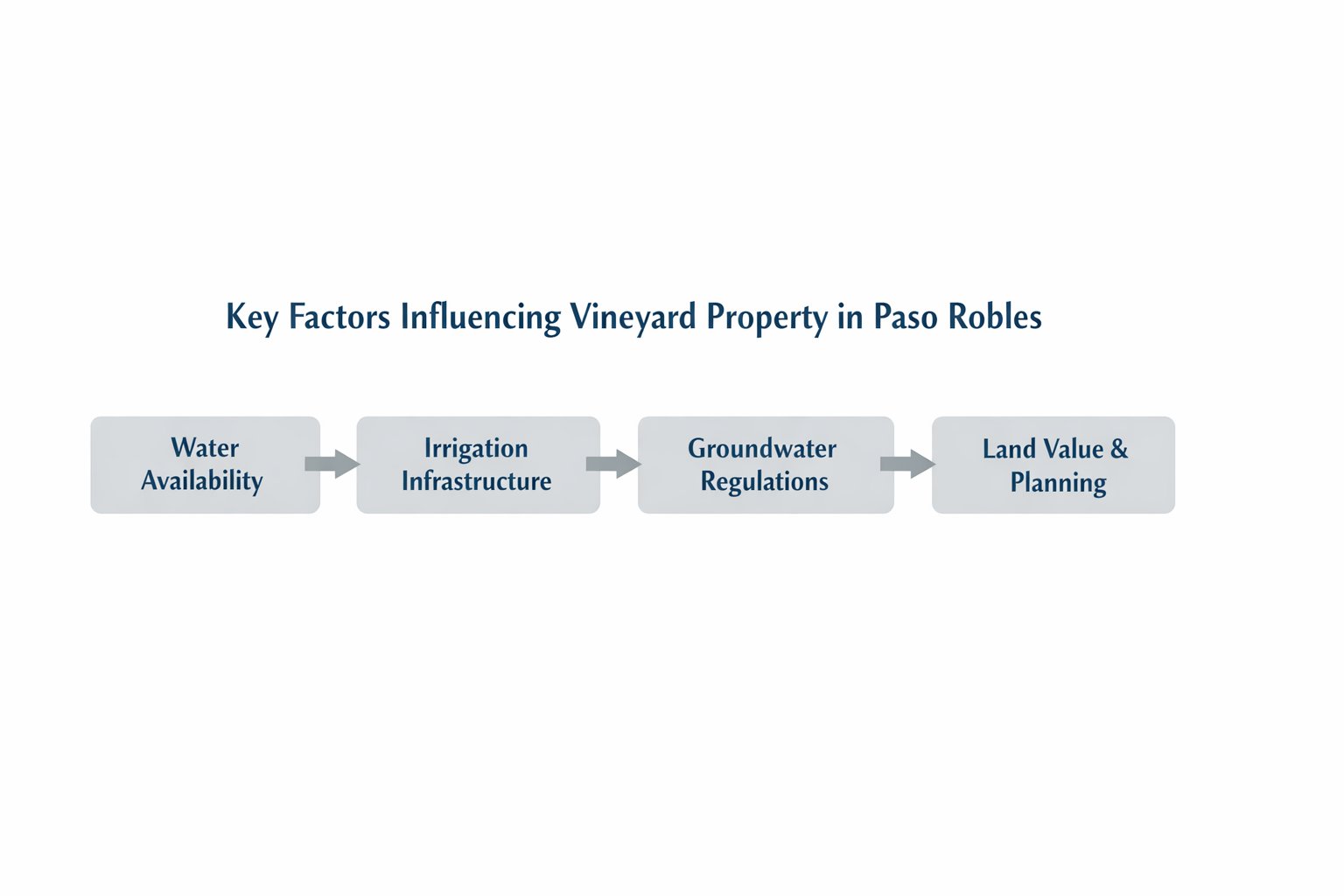
Vineyard property in this region is shaped by several interconnected factors, and water regulations are an important part of that picture.
Key factors that influence vineyard property decisions in Paso Robles include:
Because of this connection, policy changes like the Followed Land Registry and potential groundwater fees are not just regulatory details—they can influence how vineyard properties are operated, developed, and valued over time.
For property owners and investors, understanding how these pieces fit together can make it easier to plan for the future.
If you own vineyard land—or are considering purchasing agricultural property in Paso Robles—these types of regulatory updates are worth paying attention to.
Water policy plays a significant role in shaping the long-term viability and value of vineyard and agricultural land in this region.
Programs like the Followed Land Registry are intended to introduce greater flexibility and clarity for landowners, while groundwater management fees reflect the broader reality of sustainable basin management under California law.
These policies may influence decisions related to:
• Vineyard development timelines
• Crop rotation or fallowing strategies
• Irrigation infrastructure investments
• Long-term agricultural land planning
Because of that, I always encourage property owners and prospective buyers to stay informed about groundwater policies affecting the Paso Basin.
If you own land in the Paso Basin—or if you are exploring the possibility of purchasing vineyard or agricultural property here—I would like you to be aware of how water policy can shape long-term opportunities in this region. If you ever want to talk through how updates like these might affect a specific property or investment strategy, I’m always happy to have that conversation.
Dianna Vonderheide
Executive Broker, Estate Division
Vineyard Professional Real Estate
License #01475327
805-234-0640
[email protected]
Source: Paso Robles Wine Country Alliance – Paso Basin Update on Followed Land Registry and Water Use Fees.
pasoWine Alliance Paso Basin

Before You Spend the Money, Call Me

The properties I'd look twice at, the numbers I'd question, and what I'd want to know before buying one
Understanding the Details That Shape Value in Paso Robles Wine Country

A 2026–2031 Housing Market Forecast for San Luis Obispo County, Paso Robles and Templeton



My Favorite “Luxury Central Coast Morning” Itinerary


Connect with Dianna Vonderheide Advantage for a real estate experience that goes beyond the ordinary. Whether you're interested in exclusive listings, exploring your home's value, or diving into our personalized services, let's connect to make your real estate aspirations a reality.